Ken O'Kefee is working on behalf of David Ike on a new international television broadcast that has the potential to revolutionize the world and the foundation of news reporting. I wanted to share this excellent premiere of Ken's new program, "The Middle East Show."

Showing posts with label Egypt. Show all posts
Showing posts with label Egypt. Show all posts
Wednesday, November 6, 2013

Wednesday, September 18, 2013
Al-Sisi’s a Jew! Egypt is Now Israeli-Occupied Territory

The Greater Israel Project – a long-standing Zionist scheme to steal all the land between the Nile and the Euphrates – is halfway there.
They just stole the Nile.
The problem is not that Egypt’s new thug-in-chief, General Abd al-Fattah al-Sisi, is a Jew. (His mother, Malikah Titani, is a Moroccan Jew from Asefi, which makes al-Sisi a Jew and an automatic citizen of Israel.)
If the Egyptian people want to elect a Jew president in a free and fair election – like they elected the Muslim Brotherhood (MB) to the Lower House with 73% of the vote, the Upper House with 80% of the vote, the presidency with 52% of the vote, and approved the MB Constitution with 64% of the vote – that’s fine with me.
The problem is that al-Sisi has concealed his Jewish identity and Israeli connections from the Egyptian people…and destroyed their nascent democracy through deception and mass murder.
An even bigger problem: al-Sisi is almost certainly a Mossad agent. That means al-Sisi’s Egypt is not just a brutal, banana-republic-style dictatorship. It is Israeli-occupied territory: The newest and largest province of ever-expanding Greater Israel.
No wonder the Israeli ambassador called al-Sisi “a national hero for all Jews.”
Al-Sisi’s uncle, Uri Sibagh (sometimes spelled as Sabbagh) served in the Jewish Defense League (Hamagein) from 1948 to 1950, made his aliyah to Israel, and became a bigwig in Ben Gurion’s political party, serving as the secretary of the Israeli Labor Party in Beersheba from 1968 to 1981. Uri’s sister – al-Sisi’s mother – presumably emigrated to Egypt on a mission from the Mossad. That mission culminated when the Mossad overthrew President Morsi and installed its agent al-Sisi in the coup d’état of July 3rd, 2013.
The implication: Al-Sisi has been a lifelong Mossad agent. His mission: infiltrate the highest levels of power in an Arab Muslim country. Al-Sisi is today’s version of Elie Cohen, who infiltrated the highest levels of power in Syria under the name Kamal Amin Thabet before he was exposed and hanged in the public square in Damascus.
George H.W. Bush’s famous line, “If the people knew the truth, they would chase us down the street and lynch us” applies – in spades – to al-Sisi.
It has been widely reported in the mainstream media, as well as by more reliable sources, that al-Sisi has long served as the Egyptian military’s liason with Israel. During the coup d’état of July 3rd, al-Sisi was in permanent liason by telephone with the Israeli and American militaries. (Israel promised its full support, and guaranteed that US aid would not be cut off, while the US waffled.)
The Egyptian coup, especially its propaganda component, had all the earmarks of an Israeli black op. A massively financed campaign run through Egypt’s Israeli-linked mainstream media (yes, the same folks own big media there as here) repeatedly compared President Morsi to Adolf Hitler! The fact that “Morsi = Hitler” was the number one talking point of the forces behind the coup reveals that those forces were Zionists, not Egyptians. Apparently the Zionists couldn’t stop themselves from making reflexive Dr. Strangelove-style anti-Hitler salutes while they were orchestrating the al-Sisi coup – thereby giving their game away.
Since the coup, Israel has been lavishing praise, money, and support on al-Sisi. Mossad agent al-Sisi has virtually declared war on Palestine by going all-out to close the Gaza border tunnels that keep the people of Gaza alive. Meanwhile, al-Sisi has taken billions of dollars from the Rothschild puppets and likely donmeh crypto-Jews who call themselves the “House of Saud.”
Obviously the Zionist-dominated West and its Middle Eastern puppets will not allow Muslims to elect relatively honest leaders in free elections. Instead, they will use deception and violence to pursue their schemes for regional and global domination.
The Egyptian people – who elected the Muslim Brotherhood by a greater landslide than any US political party has won in all of American history – need a real Islamic revolution to create a genuine democracy. Without it, Egypt will indefinitely remain “a boot stamping on a human face – forever”…and a permanent province of Greater Israel, ruled by a Jewish-Zionist thug who has appointed himself pharaoh, while hiding his real background and loyalties.
Source
Friday, September 6, 2013
Egypt Army Demolishes Homes in Rafah, Threatens to Expel Residents
 |
| An Egyptian policeman stands guard near the scene of a bomb that targeted the convoy of Egyptian Interior Minister Mohammed Ibrahim in Cairo on 5 September 2013.(Photo: AFP - Gianluigi Guercia) |
The Egyptian armed forces are conducting a military operation in Sinai along the border in Rafah. While the operation’s stated objectives include pursuing “terrorists” and armed Islamic groups, the assault is threatening to drive residents from the area.
Sinai – In parallel with the military operation launched by the Egyptian army in Sinai, eyewitnesses confirmed to Al-Akhbar that the army is also demolishing homes on the Egyptian side of Rafah, without compensating owners and even threatening to expel them. It seems that the army wants to establish a buffer zone along the border with the Gaza Strip.
A high-level army commander visited several neighborhoods adjacent to the border on the evening of Saturday, August 31, to ask residents to evacuate their homes within a week in preparation for their demolition. According to Khaled Samir, a resident of Rafah, the military commander in question came to the neighborhood of Qanabza in plainclothes, giving the residents a week before the army would begin razing buildings within a 500-meter radius from the line separating the Egyptian and Palestinian sides of Rafah.
When asked whether the residents were compensated, Samir answered sarcastically, “We have all built palaces out of the profits from the tunnels.” Taking on a more serious tone, Samir rejected what he called generalizations and collective punishment, saying that he has not been able to get married yet because his government salary was not even enough to cover his basic needs.
The threat of expelling dozens of families without compensation led residents of the area to stage a small protest on Sunday. Tensions in the city were fueled further when the army began demolishing homes owned by the Shaweir family, prompting their occupants to threaten to blow themselves up using cooking gas bottles should the army come in. But a field commander intervened and ended the standoff, telling the residents that the demolition would be stopped and that they would not be expelled.
However, this did not last for more than a day. On Monday afternoon, the army resumed demolishing homes, which the locals stressed did not contain any tunnels. This puts the total number of homes demolished in Rafah in the span of three weeks at nine, some using explosives and others using bulldozers.
Human rights activists from Sheikh Zowaid, speaking on condition of anonymity, told Al-Akhbar that when they went to document the demolitions, they were warned by local residents not to approach because there was a “settling of scores” taking place between the owners of the homes and Egyptian intelligence officers.
Meanwhile, the residents of the border region claimed that the vehicles carrying goods to be smuggled through the tunnels could still be seen passing as usual, while most tunnels were operating efficiently. These residents said that the demolished tunnels shown in propaganda pictures by the Egyptian army accounted for only a small number of the tunnels supplying goods to Gaza.
According to the official account, only homes adjacent to tunnels are being demolished. However, residents of Rafah say that the number of destroyed tunnels is less than half the number of homes.
On the eastern side of the border, residents of the Gaza Strip complain of a fuel crisis, which has produced long lines at gas stations, but they did not complain about any shortage in basic goods or high inflation. According to a security source, stepping up control over the tunnels on the Egyptian side affects the passage of individuals, fuel, subsidized goods, and weapons. But basic goods are allowed in so that the humanitarian crisis in Gaza will not worsen further and blow up in the face of the Egyptian authorities, as the source put it.
In parallel with the demolitions, the army has carried out attacks against what it says are militant positions, but which have affected civilian homes. On Tuesday, Egyptian army Apache helicopters bombed positions in the villages of Thuma and Muqataa, south of Sheikh Zuwaid and Rafah, but local sources said that four empty houses in Thuma were hit, including an abandoned cottage belonging to a radical Islamist from the Nile Valley.
Two homes were also attacked in the village of Muqataa, and parts of the Abu Munir mosque nearby came under fire. While locals said that there were no fatalities, state television claimed that more than 10 were killed and several more injured. Neighbors living near the bombed houses denied the official account, which claimed that weapons caches had been the targets.
On Wednesday morning, the Salafi Jihadi Group in Sinai issued a statement accusing the army of deceit and treason, citing the civilian homes destroyed in the bombardment and the damage sustained by the mosque.
The statement said that the home of the family of Yusri Muharib al-Sawarka, who was assassinated by an Israeli drone during Eid al-Fitr, was also targeted in the bombing. The statement was supplemented by a few dozen pictures of the aftermath of the bombardment on the mosque and the homes, including detailed information about the remnants of rockets used.
Interestingly, Debka, a website close to Israeli intelligence, published a comment on the incidents in Sinai, saying that this was the first time in eight years that the Egyptian army fulfilled commitments agreed to by Hosni Mubarak in 2005 following the Israeli unilateral disengagement from Gaza.
According to Debka’s report, the Egyptian army, since the ouster of Mohamed Mursi, has pursued two strategies simultaneously to crack down on “terrorists” who Debka claims pose a threat to both Egypt and Israel: establish a 14 km buffer zone along the border with Gaza and erect dozens of checkpoints in the region to restrict logistical supplies to the militants.
Source
Sunday, July 28, 2013
Israeli ambassador calls Al-Sisi a "national hero for all Jews"
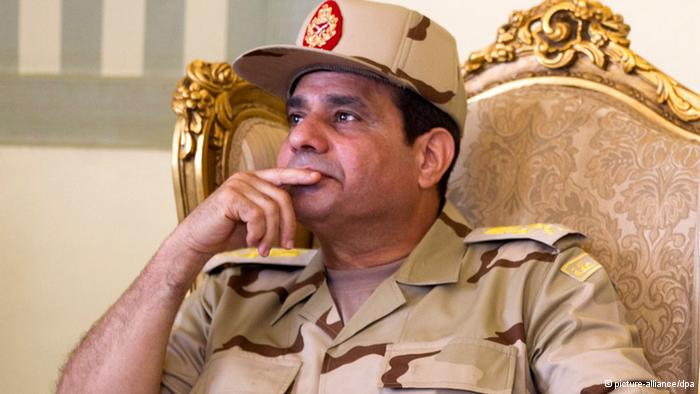
The Israeli ambassador in Cairo has told a minister in the interim government that the people of Israel look upon General Abdul-Fattah Al-Sisi as a "national hero". According to Israel Radio, the ambassador rang Agriculture Minister Ayman Abu-Hadid to congratulate him on his new post and said, "Al-Sisi is not a national hero for Egypt, but for all Jews in Israel and around the globe."
Israel is looking forward to the launch of new relationships with Egypt, said Yaakov Amitai, as well as joint efforts in the war on terror. His mention of "terror" is understood to be an oblique reference to President Mohamed Morsi’s supporters protesting against the coup which removed him from office.
The two men agreed on the resumption of the work of the Supreme Egyptian-Israeli Agricultural Committee. Meetings of the committee are held alternately in Cairo and Tel Aviv every six months. They also agreed to reactivate the Egyptian branch of the Future Leaders Network, which includes Egyptian, Jordanian, Palestinian and Israeli youths.
Israel is looking forward to the launch of new relationships with Egypt, said Yaakov Amitai, as well as joint efforts in the war on terror. His mention of "terror" is understood to be an oblique reference to President Mohamed Morsi’s supporters protesting against the coup which removed him from office.
The two men agreed on the resumption of the work of the Supreme Egyptian-Israeli Agricultural Committee. Meetings of the committee are held alternately in Cairo and Tel Aviv every six months. They also agreed to reactivate the Egyptian branch of the Future Leaders Network, which includes Egyptian, Jordanian, Palestinian and Israeli youths.
Sunday, July 7, 2013
Warning of humanitarian catastrophe as Egypt tightens siege of Gaza
 |
| Palestinian security guards stand near an Egypt watch tower at the Gaza-Egypt border, 5 July. |
An Egyptian general has said that President Muhammad Morsi, who was overthrown by the army on Wednesday, may be charged by the military with “collaborating” with the Palestinian resistance group Hamas in the Gaza Strip.
Meanwhile, urgent action is needed to avoid a looming humanitarian catastrophe in Gaza, a human rights group warned today, as the political crisis in neighboring Egypt deepens.
Closing Rafah, blaming Palestinians for Egypt’s problems
Earlier today, Egyptian authorities shut down the Rafah crossing, the only route to the outside world for the vast majority of Palestinians in Gaza. The closure came after reported attacks on several Egyptian army checkpoints and posts in Egypt’s Sinai peninsula.
Egyptian authorities and media have routinely blamed such attacks on Palestinians or on Hamas, without any evidence, and Egypt has habitually imposed collective punishments by closing Rafah.
General says Morsi “collaborated” with Hamas
In a striking example today, Brigadier General (Ret.) Ayman Salama, who teaches at Cairo’s Military Academy, told the BBC World Service Newshour that part of the reason the army had overthrown Morsi was his alleged collaboration with Hamas against Egypt. more
Source
Friday, September 28, 2012
Only ten percent of Gaza life-line tunnels still operating
 |
Palestinian men stand behind a net where migrant quails are snared on the beach of Khan Yunis in southern Gaza Strip on September 25, 2012. Palestinians erect hundreds of meters of yellow silk nets along the coastline in the Gaza Strip to hunt migratory birds, mainly quails, which start arriving to the coasts of the Mediterranean in the second half of September of each year. AFP PHOTO/ SAID KHATIB |
Just 10 percent of Gaza's smuggling tunnels to Egypt are still in operation after bearing the brunt of an Egyptian military crackdown in recent months, according to Ma'an news agency.
An August 5 militant attack on Egyptian policemen in the Sinai peninsula which killed 16 prompted the government to close most of Gaza's nearly 1,000 tunnels.
Authorities said they suspected the militants had been sneaking into Egypt from Gaza via the tunnels, which they had previously turned a blind eye to.
Tunnel owners said the tunnels have fallen under the sway of Egyptian and Palestinian authorities who insist on identifying people using the tunnels, and controlling the quality of goods passing through.
When security conditions permit, fuel and construction materials are allowed to freely pass into Gaza, a tunnel owner who called himself Mahmoud said.
Gaza's ministry of national economy said monthly imports of basic foodstuffs had fallen by 31 percent, and construction materials had declined byy 45 percent since the tunnel closures.
Israel's blockade on the Gaza strip, aided by Egypt's frequent closures of the Gaza-Egypt Rafah crossing, set off a humanitarian crisis in the strip, turning the tunnels into a veritable lifeline for its 1.7 million residents.
Eyewitnesses told Ma'an that Egyptian bulldozers remained on the Egyptian borders with the Gaza strip, and were continuing to destroy the tunnels.
Source
Friday, August 10, 2012
Israel-Egypt security cooperation at one of highest levels since peace deal, say officials on both sides - Let Hamas be upset, we don't care.
 |
| تل أبيب تهلّل للتنسيق مع القاهرة: غير مسبوق Tel-aviv hails unreceeded security co-ordination with Egypt |
Militants Attack Checkpoint in Sinai as Egypt Army Masses Troops
Local EditorGunmen attacked checkpoint in Egypt's Sinai overnight, causing no casualties, as the army massed troops to quell militants.

The border was closed after militants ambushed troops on Sunday and killed 16.
There were no further details on the overnight attack outside the town of El Arish in a region that has been increasingly on edge since Sunday's raid.
On Thursday, trucks carrying dozens of armored personnel carriers mounted with machineguns rolled through El-Arish heading to the east, where Bedouin militants have established a presence in villages near the borders with Gaza and with the occupied territories.
The build-up came after state television reported that military helicopters and soldiers killed 20 militants on Wednesday in the first such operation in Sinai in decades, in retaliation for the raid.
The Zionist entity said on Thursday it gave Egypt the “go-ahead “to deploy helicopters in Sinai, easing the restrictions on military presence in the peninsula set by a 1979 “peace” treaty between the neighboring countries.
At a late-night meeting with Interior Minister Ahmed Gamal al-Din in El-Arish, roughly 50 kilometers west of the Gaza border, Bedouin tribal leaders demanded to see the bodies of the militants reportedly killed on Wednesday.
"We demanded that they present us the bodies, just one or two bodies, so we can be convinced," said Eid Abu Marzuka, one of the Bedouin who took part in the meeting.
Others said they doubted the report, which a military commander in Sinai had confirmed.
The tribal leaders said they had agreed to help the military and police to restore security in the lawless peninsula and close down tunnels used to smuggle contraband and weapons to the Gaza Strip.
"There was a consensus among the tribes to destroy the tunnels. Let Hamas be upset, we don't care. Egypt should deal with the Palestinians through the Rafah border crossing," said Marzuka.
"We are against smuggling, and against the siege," he added, referring to the blockade the Zionist entity imposed on the enclave since 2007.
Source
Wednesday, July 25, 2012
New President of Egypt Ridiculed in Israeli Video
Dr. Ashraf Ezzat
Alexandria, Egypt.
Israeli TV has lately screened one of a new series of ads, sponsored by The Temple Institute, which promote the so called “rebuilding of the temple mount.
The video titled ‘The Children are Ready’ is causing a lot of controversy amongst Egyptians, especially users of Twitter, facebook and YouTube who saw the video as an insult to their president.
The proposed location for this temple mount is very provocative, for it is the site occupied, since 705 CE, by the Al-Aqsa mosque, one of the holiest places for Muslims on earth.
Muslims believe that Muhammad was transported from the Sacred Mosque in Mecca to al-Aqsa during a miraculous Night Journey. While Judaism regards the Temple Mount as the place where God chose the Divine Presence to rest. Both explanations are really cool.
Anyway, for this “temple mount” to be built, Al-Aqsa mosque has to be demolished. It is as simple as that.And as a matter of fact, this dangerously ambitious plan is what the Israeli governments have in mind as the non-stop digging underneath the mosque has been going/eroding the foundation of the mosque in the name of archeological excavations for almost four decades now.
The Israeli archeologists know they won’t find/stumble upon any Hebrew relic, but they hope that, thru their ruthless digging under the mosque, they would contribute to the Zionist cause of undermining the Arab/Muslim identity of the old city of Jerusalem. All part of an undergoing plan for the judaization of Palestine. In the video, an Israeli family in a relaxing outing at the beach, only the father is not so relaxed.
While he is totally consumed with reading news of the Syrian unrest and the newly elected president of Egypt, Mohamed Morsy, his kids are having fun building what, on first glance, seemed to be as an ordinary sandcastle.
But upon completion of their work, the boy and the girl haven’t just built any castle. They built something very close to the design of the temple mount, the Israeli media have been promoting for ages now.
Enthusiastic and extremely thrilled by their accomplishment, the kids drag their reluctant father out of his chair and preoccupation with what is going on in Egypt and urge him to take a look at their sand model of the “temple mount”.
Speechless and stunned by the kids’ vision clarity and powerful expression, his fears of an Islamist president of post-Mubarak Egypt suddenly seemed groundless and somehow childish.
And still in his dumbstruck mood, the paper slips through his fingers, and falls to the ground, in a slow motion shot, where it thoughtlessly sets close to his feet, highlighting the photo of Mohamed morsy, the new president of Egypt.
There are actually three messages in the video. The first one is simple and straightforward; the newly elected president of Egypt, whose affiliation to the Muslim Brotherhood (MB) and support for Hamas that have left a lot of Israelis worried lately, won’t hinder the Zionist dream of Judaizing Palestine.
The second message is somehow subdued and mainly addresses the western audience of Zionist Christians and Jews who are being brainwashed, since 9/11, with the idea that the Islamists are the new bogeyman/ enemy of the west and Israel.
The third one is to Embarrass the new president of Egypt, especially that Tel Aviv is fully conscious of the deep divide amongst the Egyptians themselves regarding Mr. Morsy and their doubts of his hidden MB agenda for the most important country in the Middle East.
But the buzz this video has created on the social web sites has clearly shown that while Egyptians, after toppling Mubarak, are willing to criticize whomever will occupy the presidential palace, they remain staunch in their rejection to any disrespectful remark that would touch the Egyptian presidency, especially if it was Israeli.
Source
Monday, June 4, 2012
Alan Hart : The Lies about the 1967 War are still more Powerful than the Truth
A large part of the reason why today rational debate about making peace is impossible with the vast majority of Jews everywhere is that they still believe Egypt and the frontline Arab states were intending to annihilate Israel in 1967, and were only prevented from doing so by Israel’s pre-emptive strike.
by Alan Hart |
Israeli armoured troop unit entering Gaza during the Six-Day War, June 6, 1967. |
Until the 1967 war, and with the exception of a minority of who were politically active, most non-Israeli Jews did not have – how can I put it? – a great empathy with Zionism’s child. Israel was there and, in the sub-consciousness, a refuge of last resort; but the Jewish nationalism it represented had not generated the overtly enthusiastic support of the Jews of the world. The Jews of Israel were in their chosen place and the Jews of the world were in their chosen places. There was not, so to speak, a great feeling of togetherness. At a point David Ben-Gurion, Israel’s founding father and first prime minister, was so disillusioned by the indifference of world Jewry that he went public with his criticism – not enough Jews were coming to live in Israel.
 |
The Six-Day War of June 5–10, 1967 was a war between Israel and the neighboring states of Egypt, Jordan, and Syria. The Arab states of Iraq, Saudi Arabia, Sudan, Tunisia, Morocco and Algeria also contributed troops and arms. At the war’s end, Israel had gained control of the Sinai Peninsula, the Gaza Strip, the West Bank, East Jerusalem, and the Golan Heights. The results of the war affect the geopolitics of the region to this day. |
So how and why did the 1967 war transform the relationship between the Jews of the world and Israel?
 |
Gen Moshe Dayan (L) , Gen Haim Bar Lev & PM Levi Eshkol (R) Photo Bruner Ilan |
But the intensity of the pride most Jews of the world experienced with Israel’s military victory was in large part a product of the intensity of the fear that came before it. In the three weeks before the war, the Jews of the world truly believed, because (like Israeli Jews) they were conditioned by Zionism to believe, that the Arabs were poised to attack and that Israel’s very existence was at stake and much in doubt.
The Jews of the world (and Israeli Jews) could not be blamed for believing that, but it was a big, fat propaganda lie. Though Egypt’s President Nasser had asked UNEF forces to withdraw, had closed the Straits of Tiran to Israeli shipping and had reinforced his army in the Sinai, neither his Egypt nor any of the frontline Arab states had any intention of attacking Israel. And Israel’s leaders, and the Johnson administration, knew that.
In short, and as I detail and document in my book Zionism: The Real Enemy of the Jews, the offensive Israel launched at 0750 hours (local time) on Monday 5 June was not a pre-emptive strike or an act of self-defence. It was a war of aggression.
The summary truth about that war is this.
Assisted by the regeneration Palestinian nationalism, which became the tail that wagged the Arab dog despite the brutal efforts of the intelligence services of the frontline Arab states to prevent it happening, Israel’s military and political hawks set a trap for Nasser; and he walked into it, with eyes half-open, in the hope that the international community, led by the Johnson administration, would restrain Israel and require it and Egypt to settle the problem of the moment by diplomacy. From Nasser’s perspective that was not an unreasonable expectation because of the commitment, given by President Eisenhower, that in the event of the closure of the Straits of Tiran by Egypt to Israeli shipping, the U.S. would work with the “society of nations” to cause Egypt to restore Israel’s right of passage, and by so doing, prevent war.
A large part of the reason why today rational debate about making peace is impossible with the vast majority of Jews everywhere is that they still believe Egypt and the frontline Arab states were intending to annihilate Israel in 1967, and were only prevented from doing so by Israel’s pre-emptive strike.
If the statement that the Arabs were not intending to attack Israel and that the existence of the Zionist state was not in danger was only that of a goy (a non-Jew, me), it could be dismissed by supporters of Israel right or wrong as anti-Semitic conjecture. In fact the truth the statement represents was admitted by some of the key Israeli players – after the war, of course.
 |
Egyptian President Gamal Abdul Nasser (1918-1970). |
In an interview published in Le Monde on 28 February 1968, Israeli Chief of Staff Rabin said this: “I do not believe that Nasser wanted war. The two divisions which he sent into Sinai on 14 May would not have been enough to unleash an offensive against Israel. He knew it and we knew it.”
On 14 April 1971, a report in the Israeli newspaper Al-Hamishmar contained the following statement by Mordecai Bentov, a member of the wartime national government. “The entire story of the danger of extermination was invented in every detail and exaggerated a posteriori to justify the annexation of new Arab territory.”
On 4 April 1972, General Haim Bar-Lev, Rabin’s predecessor as chief of staff, was quoted in Ma’ariv as follows: “We were not threatened with genocide on the eve of the Six Days War, and we had never thought of such a possibility.”
In the same Israeli newspaper on the same day, General Ezer Weizmann, Chief of Operations during the war and a nephew of Chaim Weizmann, was quoted as saying: “There was never any danger of annihilation. This hypothesis has never been considered in any serious meeting.”
In the spring of 1972, General Matetiyahu Peled, Chief of Logistical Command during the war and one of 12 members of Israel’s General Staff, addressed a political literary club in Tel Aviv. He said: “The thesis according to which the danger of genocide hung over us in June 1967, and according to which Israel was fighting for her very physical survival, was nothing but a bluff which was born and bred after the war.”
In a radio debate Peled also said: “Israel was never in real danger and there was no evidence that Egypt had any intention of attacking Israel.” He added that “Israeli intelligence knew that Egypt was not prepared for war.”
In the same programme General Chaim Herzog (former Director of Military Intelligence, future Israeli Ambassador to the UN and President of his state) said: “There was no danger of annihilation. Neither Israeli headquarters nor the Pentagon – as the memoirs of President Johnson proved – believed in this danger.”
On 3 June 1972 Peled was even more explicit in an article of his own for Le Monde. He wrote: “All those stories about the huge danger we were facing because of our small territorial size, an argument expounded once the war was over, have never been considered in our calculations. While we proceeded towards the full mobilisation of our forces, no person in his right mind could believe that all this force was necessary to our ‘defence’ against the Egyptian threat. This force was to crush once and for all the Egyptians at the military level and their Soviet masters at the political level. To pretend that the Egyptian forces concentrated on our borders were capable of threatening Israel’s existence does not only insult the intelligence of any person capable of analysing this kind of situation, but is primarily an insult to the Israeli army.”
The preference of some generals for truth-telling after the event provoked something of a debate in Israel, but it was short-lived. If some Israeli journalists had had their way, the generals would have kept their mouths shut. Weizmann was one of those approached with the suggestion that he and others who wanted to speak out should “not exercise their inalienable right to free speech lest they prejudice world opinion and the Jewish diaspora against Israel.”
It is not surprising that debate in Israel was shut down before it led to some serious soul-searching about the nature of the state and whether it should continue to live by the lie as well as the sword; but it is more than remarkable, I think, that the mainstream Western media continues to prefer the convenience of the Zionist myth to the reality of what happened in 1967 and why. When reporters and commentators have need today to make reference to the Six Days War, almost all of them still tell it like the Zionists said it was in 1967 rather than how it really was. Obviously there are still limits to how far the mainstream media is prepared to go in challenging the Zionist account of history, but it could also be that lazy journalism is a factor in the equation.
For those journalists, lazy or not, who might still have doubts about who started the Six Days War, here’s a quote from what Prime Minister Begin said in an unguarded, public moment in 1982. “In June 1967 we had a choice. The Egyptian army concentrations in the Sinai approaches did not prove that Nasser was really about to attack us, We must be honest with ourselves. We decided to attack him.”
Alan Hart is a former ITN and BBC Panorama foreign correspondent who covered wars and conflicts wherever they were taking place in the world and specialized in the Middle East. His Latest book Zionism: The Real Enemy of the Jews, is a three-volume epic in its American edition. He blogs on www.alanhart.net and tweets on www.twitter.com/alanauthor
Source
Monday, April 9, 2012
Israel threatens military incursion in Egypt's Sinai Peninsula

According to Haaretz newspaper, the authorities in Cairo have been sent a "strongly-worded message" about the responsibility they have for the situation in Sinai.
Israel, said Haaretz, has told the Egyptian leadership that it will have to work on its own in Sinai to prevent further rocket attacks.
The move comes after two Grad missiles were fired towards the southern Israeli port of Eilat on the Red Sea coast last week. The military authorities in Egypt denied that the rockets were launched from its territory.
Political sources in Israel confirmed that Tel Aviv has allowed the deployment of Egyptian troops in the Sinai Peninsula "to prevent terrorist attacks", even though such a move contravenes the terms of the Camp David peace agreement between Egypt and Israel.
"Israel agreed to Cairo's request to deploy seven battalions of the Egyptian security forces in Sinai," said the sources. "The size of the forces deployed is subject to monthly confirmation." There is "fruitful cooperation" between Israel and Egypt in these anti-terrorist efforts. The Head of Israel's Intelligence Corps, Major General Aviv Kochavi, said recently that "more than ten terror cells have been uncovered in the Sinai peninsula over the past two months"; the attacks being planned, he added, "were prevented".
Source
Tuesday, April 3, 2012
Hamas announces deal on Gaza electricity crisis
The deal was confirmed by the rival Palestinian Authority government in Ramallah, though it said the deal was contingent on Gaza's electricity company – under Hamas control – paying for the fuel deliveries.
Hamas spokesman Taher al-Nunu announced "a deal with our brothers in Ramallah on the delivery of fuel for the Gaza power station, under which the public petrol company will deliver 500,000 liters a day, is starting tomorrow."
"The price of the delivery will be covered by the Gaza electricity company's revenue," he added.
"The electricity company has transferred two million shekels (US$540,000) as a deposit for this agreement and we hope that its application as agreed with our brothers in Ramallah will begin to solve the electricity crisis in Gaza."
The spokesman for Prime Minister Salam Fayyad's government in the West Bank noted that the Palestinian Authority had already secured the delivery of more than 400,000 liters of diesel fuel from Israel for the power station last month.
"This is a temporary measure that will be carried out so long as the electricity company in Gaza continues to pay the petrol company the necessary funds," Ghassan Khatib told AFP of the new agreement.
The deal was agreed to after talks were held in Cairo between Egyptian officials and representatives from the Hamas and Palestinian Authority governments.
Hamas Foreign Minister Mohammed Awad said the agreement would compliment an earlier deal between Hamas and Egypt to work to resolve Gaza's long-standing electricity problems.
That agreement, announced by Hamas on February 23, called for three stages, the first of which would see Egyptian companies pumping fuel directly to Gaza under the terms of contracts signed with the firms.
The second part of the agreement called for the Islamic Development Bank to fund a project to upgrade and increase the capacity of Gaza's sole power plant by 40 megawatts.
The final phase would connect Gaza's electricity grid to Egypt's and convert the Palestinian territory's power plant, which currently supplies about one-third of Gaza's electricity, from diesel to gas.
Gaza has long suffered power outages because of the economic blockade of the Palestinian people by Israel.
The Jewish state continues to block economic development in Gaza by maintaining a blockade on the territory.
Source
Monday, April 2, 2012
Haneyya calls on Egypt to restrain Israeli targeting of Palestinian prisoners

Haneyya, during a visit to liberated prisoner Hana’a Shalabi in Shifa hospital in Gaza on Monday, said that Israel had violated articles of the agreement that banned re-arrest of freed captives in this deal.
He described the deportation of Shalabi to Gaza as a war crime and a violation of human rights, adding that his government would ask Arab and international courts to put an end to such policy.
The premier, shifting to another issue, said that the fuel crisis in Gaza would be resolved within days, pointing to the presence of his deputy in Cairo for that matter.
He hailed in this respect the Qatari donation of 25000 tons of fuel to Gaza, adding that it would suffice the Strip for two months.
Source
Israelis express fears about millionaire who may be Egypt's next president

The newspaper pointed out the many concerns in the West that Egypt may turn into an Islamic state, even though El-Shater is considered to be a moderate in the eyes of the Western world. An Israeli official described the Brotherhood's decision to contest the presidential election as "worrying". In a statement published by the New York Times, the anonymous official said, "It is clear that this is not good news." The Muslim Brotherhood, he added, "are not friends; they won't do good for us". The big question, he claimed, "is how pragmatic" a Brotherhood president would be if El-Shater wins. According to the New York Times, the US State Department refused to comment on the nomination of El-Shater for the presidency.
Israeli analysts believe that Khayrat El-Shater is the strong man of the Muslim Brotherhood. He led on communications with the leadership of the armed forces; organised the commission for the parliamentary elections; led negotiations with the Gulf States and the World Bank to obtain loans to boost the Egyptian economy; and he is considered to be the real centre of power who is making efforts to expand the influence of his movement across Egyptian networks and institutions, despite opposition from senior officers in the Supreme Council of the Armed Forces (SCAF).
Yedioth Ahronoth pointed out that El-Shater is known as the man who has relatively moderate views towards Israel and the West, adding that he told Britain's Guardian newspaper in 2005 that there is no justification for the fears of the rise of the Muslim Brotherhood. After all, he explained at the time, he respects the rights of all political and religious groups. Just two months ago, in an interview with another newspaper, Al-Ahram, he made it very clear that the Muslim Brotherhood is committed to all agreements and treaties signed by previous Egyptian governments, regardless of any reservations held. El-Shater's views, indeed, led the New York Times to describe him as the moderate and most open man in the Muslim Brotherhood who is watching over the change of part of the movement's principles in order to be more tolerant towards the West.
Source
Saturday, March 17, 2012
Sit-in staged at Rafah terminal asking Egypt to end Gaza fuel, power crisis

RAFAH, (PIC)-- Palestinian citizens and notables staged a sit-in at the Rafah border crossing between Egypt and Gaza on Saturday demanding an end to the fuel and power crisis.
The participants hoisted placards asking Egypt to expedite sending fuel supplies, criticizing Cairo for delaying sending fuel shipments despite receiving money for that purpose.
They also asked the Egyptian authority to link its national grid to Gaza electricity network.
Mansour Breik, the head of a popular committee in Rafah, said that the power crisis, which has been plaguing the Strip for the past month, had negatively affected the people’s needs.
He urged Cairo to adopt a political decision ending once and for all the Gaza power crisis.
Wednesday, March 14, 2012
No fuel for Palestinians despite Egypt payments
 |
Palestinian schoolchildren hold up candles during a protest in Gaza City calling for supplying the Gaza Strip with enough fuel on 14 February 2012. (Photo: AFP - Mohammed Abed) |
The Palestinian energy authority in Gaza said on Wednesday it had paid Egypt US$2 million for fuel for its crippled power station, but had yet to receive anything in return.
Gaza is experiencing a major electricity crisis because of a shortage of fuel to its sole power plant, mainly caused by a continued Israeli siege imposed on the territory since 2006.
The plant, which supplies nearly a third of Gaza's electricity, has shut down three times in the past month and most Palestinians are receiving only six hours of power a day.
The situation was exacerbated over the weekend by an Israeli bombing campaign which killed 26 people and destroyed key infrastructure.
The Palestinians have turned to Egypt for help, and recently agreed to a deal which included a provision allowing them to immediately begin purchasing fuel from their Arab neighbor.
But the Palestinian Energy and Natural Resources Authority (PENRA) said on Wednesday it had yet to receive any fuel, despite having made a down payment.
"US$2 million was transferred to the Egyptian Petroleum Company as a down payment for the fuel needed to operate the only power station in Gaza," PENRA said in a statement published on its website.
"So far, nothing has been received by the station, which has not been operating (fully) for weeks, increasing the suffering of the Palestinian people," it said.
PENRA hopes "the fuel enters as soon as possible so that station can resume operations."
The plant stopped generating power on March 10, for the third time in four weeks, and was operating at sharply reduced capacity on Wednesday.
On February 23, Hamas said it had reached a "comprehensive agreement" with Egypt to end the crisis.
Under the deal, the Palestinians were to begin the immediate purchase of fuel from Egypt, with the Islamic Development Bank funding a project to upgrade and increase the capacity of Gaza's power plant by 40 megawatts.
The deal also called for the eventual connection of Gaza's electricity grid to Egypt's and for the conversion of Gaza's power plant from diesel to gas.
Source
Tuesday, March 13, 2012
Muslim Brotherhood condemns Israeli aggression on Gaza and blames US for giving the green light

In a statement issued on 12 March, the Brotherhood said that Netanyahu returned from America with an inflated sense of his own power after seeing how the US President, Barack Obama, fawned over the Zionist lobby. "America's submissive attitude towards Israel boosts the Zionist leadership's vanity and aggression, giving them the sense of immunity which prompted them to start bombing the besieged Gaza Strip, targeting women and children as well as resistance leaders."
According to the Islamic movement in Cairo, the Israelis "are not only the enemies of life but also the enemies of humanity". Killing, the Brotherhood's statement continued, is at the core of Israeli ideology. "Israel wants to ignite the Middle East," said the statement. "why shouldn't it, having just received the unquestioning support of the world's superpower and being guaranteed of the silence of the other Western states?"
The Muslim Brotherhood condemned Israel's “brutal aggression" and called on Arabs and Muslims to "wake up and support the people of Palestine in the face of the systematic killings and displacement". The statement pointed out that the people of the region and Muslims around the world should stand united against the Judaisation of Jerusalem and the threat posed to Al-Aqsa Mosque.
"Palestinian reconciliation is also being targeted by the Israelis," said the Brotherhood. "We ask the Arabs and Muslims to use all their political and economic means to put pressure on the Governments of the United States and the West to abandon their bias towards the Zionist aggression so that the people of Palestinian can live with dignity."
Source
Saturday, March 10, 2012
Madhoun: A new Israeli operation in Gaza may extend to Egypt this time

"We need to emphasize first that the Zionist aggression has not stopped for one moment against Palestine, either in Gaza, the West Bank or Jerusalem, and what is happening to Gaza now is only an episode of Israel's crimes against the Palestinian people; this arrogance will continue since there is Arab and international silence," Madhoun told the Palestinian information center (PIC) on Saturday.
He said the Israeli military attacks of Friday were the most serious since the last Israeli war on Gaza that ended in 2009.
"It is noted that the aggression started in the wake of the controversial meeting between the occupation government premier Benjamin Netanyahu and US president Barack Obama who agreed on delaying or not considering the option of attacking Iran; what it looks like that the occupation was entertaining the intention to deliver a painful strike against the Gaza Strip in a bid to restore its deterrence capability that it had lost after Wafa Al-Ahrar swap deal, as well as to drain the resistance, test its actual ability and monitor its moves," the analyst elaborated.
He opined that that there could be an Israeli scheme to repeat its military operation, the cast lead, against Gaza in order to confuse the changes taking place in the Arab world, especially in Egypt, and to gauge how the post-revolution Arab masses would react if it attacked Gaza.
The political analyst warned that in case the Israeli aggression against Gaza escalated, it would have the snowball effect and could extend to Egypt and its Sinai territory, especially since Israeli voices started to emerge lately calling for a military operation against Sinai.
http://www.palestine-info.co.uk
Wednesday, March 7, 2012
Gaza energy authority: Rafah area ready to receive fuel from Egypt

Spokesman for the energy authority Ahmed Abul Amrin said everything is technically ready to receive the Egyptian diesel fuel in a location in Rafah area and the authority is waiting for the Egyptian side to fulfill what was agreed upon.
The spokesman, however, said the authorities in Gaza have no idea when the Egyptian side would start to implement the agreement and provide the Gaza power plant with its fuel needs.
He noted that the authority managed to get small amounts of fuel through Rafah underground tunnels that would help it to operate one plant generator.
http://www.palestine-info.co.uk
Tuesday, March 6, 2012
Gaza: The Politics of Darkness
 | ||
| The local power plant – shut down twice in the past two years – was operated again using a limited daily supply of fuel smuggled through the tunnels. (Photo: Shuaib Abou-Jahl) |
From the window overlooking the pier of Gaza’s humble port, you can see nothing at night but two lamp posts barely lighting the space underneath. Every once in a while, even the two lights are extinguished and total darkness takes over. You stare into the night, you hear the waves but you don’t see anything. There is no moon. Only dark clouds pouring out their inexhaustible load of rain.
Gaza – The underground wells have been filled with rainwater and the people are optimistic about the upcoming farming season. Despite the continued stormy weather, spring is approaching. The orchards are filled with yellow and white flowers covering the grassland under the olive and lemon trees.
There is a visible shortage of water-pipes in cafés, where white neon lights radiate. I don't know why I don't like neon lights. Perhaps because they are too dim – deficient, like a "thundercloud that does not rain," as the poem puts it.
The tone of the light betrays the power source – what we experts in electricity shortages refer to as "UPS", (uninterruptible power supply): batteries that recharge when the mains current is running, so they can be used to power lights when the electricity is cut off. But the mains supply is so scarce here in Gaza that not even that is always possible.
The lighting problem can be resolved to a certain extent by a combination of generators, mains electricity, and the UPS. But what about refrigerators preserving food? What about the irregular current that ruins appliances? Gazans are surprised by the relevance of these questions about electricity. I explain to them that we have the same problem in Lebanon.
Gaza's restaurants are also concerned about the power outage. In one establishment, Ahmad – a waiter with a college diploma in public relations, who hopes to find a job abroad – said there was only one week’s worth of gas and fuel left to power the generators.
After that, he said, they would probably revert to using the "portable kerosene burners we used during the aggression,” Israel’s 2008/9 assault on the Gaza Strip. “We have a huge one with three burners connected to a cylinder that we filled with kerosene and cooked on," he explained.
And where does the kerosene come from? "The tunnels, but at black market prices," he responds.
To keep meat and dairy products from spoiling, he said, the trick is not to stock such perishable foods but purchase them daily according to need. "But we really don't know what we're going to need. It's a big problem," he said.
It is indeed. The Egyptians were reported to have reneged on an offer to supply diesel to Gaza. One day earlier, it was announced that an attempt to smuggle fuel from Egypt through Gaza's tunnels – an activity that has flourished since the blockade was imposed – had been “foiled.” It is funny. The only thing foiled by such actions are the efforts of people on both sides to make a living through the lucrative black market.
Gaza – The underground wells have been filled with rainwater and the people are optimistic about the upcoming farming season. Despite the continued stormy weather, spring is approaching. The orchards are filled with yellow and white flowers covering the grassland under the olive and lemon trees.
There is a visible shortage of water-pipes in cafés, where white neon lights radiate. I don't know why I don't like neon lights. Perhaps because they are too dim – deficient, like a "thundercloud that does not rain," as the poem puts it.
The tone of the light betrays the power source – what we experts in electricity shortages refer to as "UPS", (uninterruptible power supply): batteries that recharge when the mains current is running, so they can be used to power lights when the electricity is cut off. But the mains supply is so scarce here in Gaza that not even that is always possible.
The lighting problem can be resolved to a certain extent by a combination of generators, mains electricity, and the UPS. But what about refrigerators preserving food? What about the irregular current that ruins appliances? Gazans are surprised by the relevance of these questions about electricity. I explain to them that we have the same problem in Lebanon.
Gaza's restaurants are also concerned about the power outage. In one establishment, Ahmad – a waiter with a college diploma in public relations, who hopes to find a job abroad – said there was only one week’s worth of gas and fuel left to power the generators.
After that, he said, they would probably revert to using the "portable kerosene burners we used during the aggression,” Israel’s 2008/9 assault on the Gaza Strip. “We have a huge one with three burners connected to a cylinder that we filled with kerosene and cooked on," he explained.
And where does the kerosene come from? "The tunnels, but at black market prices," he responds.
To keep meat and dairy products from spoiling, he said, the trick is not to stock such perishable foods but purchase them daily according to need. "But we really don't know what we're going to need. It's a big problem," he said.
It is indeed. The Egyptians were reported to have reneged on an offer to supply diesel to Gaza. One day earlier, it was announced that an attempt to smuggle fuel from Egypt through Gaza's tunnels – an activity that has flourished since the blockade was imposed – had been “foiled.” It is funny. The only thing foiled by such actions are the efforts of people on both sides to make a living through the lucrative black market.
They also have political implications in Egypt. Egypt’s Speaker of Parilament Saad al-Katatni is doing his best to help his "brothers" in Gaza. Well-placed sources told Al-Akhbar that the Egyptian legislature had in fact extracted promises from the electricity and oil ministries to supply Gaza, but they had not been acted on. Egyptian policy on Palestine, as one observer put it, has yet to make the “transition between the Hosni Mubarak and Muslim Brotherhood eras.”
Despite the reconciliation agreement between Fatah and Hamas, the rift between the Ramallah-based Palestinian Authority and Hamas-ruled Gaza remains highly charged – and liable to affect all Palestinians' affairs and concerns.
Ismail Haniyeh, the prime minister of the Gaza government, delivered an "electric" sermon last Friday at al-Shate Camp Mosque in which he blamed Egypt for the shortages. This brought tensions between the two sides out into the open, and also constituted a kind of denial of blame on Hamas’ part.
There was a new development Saturday, when Cairo announced that it was willing to supply Gaza with fuel at world market prices – in other words, not at the cheaper Egyptian domestic price. Haniyeh said he had been told that bluntly by the Egyptian energy ministry. Gazans cannot help recalling the outrage in Egypt when the former regime sold gas to Israel at below domestic prices, despite shortages at home. But Hamas is not Israel.
Nevertheless, the crisis was exacerbated after the Gaza Energy Authority (GEA) stopped operating the only power station in the Gaza Strip. The reason was the failure to secure supplies of diesel fuel, according to Ahmad Abu al-Umrayn an engineer at the energy ministry in Gaza.
"I wish you came to our home, my children love the Lebanese accent," Abu al-Umrayn said as we left his unlit second-floor office. "They say: ‘Dad, they speak like in Al-Ghaliboun (The Winners),’" a TV series aired on Hezbollah’s channel, al-Manar. Do they still watch al-Manar after Hamas left Syria? I kept the question to myself.
Despite the reconciliation agreement between Fatah and Hamas, the rift between the Ramallah-based Palestinian Authority and Hamas-ruled Gaza remains highly charged – and liable to affect all Palestinians' affairs and concerns.
Ismail Haniyeh, the prime minister of the Gaza government, delivered an "electric" sermon last Friday at al-Shate Camp Mosque in which he blamed Egypt for the shortages. This brought tensions between the two sides out into the open, and also constituted a kind of denial of blame on Hamas’ part.
There was a new development Saturday, when Cairo announced that it was willing to supply Gaza with fuel at world market prices – in other words, not at the cheaper Egyptian domestic price. Haniyeh said he had been told that bluntly by the Egyptian energy ministry. Gazans cannot help recalling the outrage in Egypt when the former regime sold gas to Israel at below domestic prices, despite shortages at home. But Hamas is not Israel.
Nevertheless, the crisis was exacerbated after the Gaza Energy Authority (GEA) stopped operating the only power station in the Gaza Strip. The reason was the failure to secure supplies of diesel fuel, according to Ahmad Abu al-Umrayn an engineer at the energy ministry in Gaza.
"I wish you came to our home, my children love the Lebanese accent," Abu al-Umrayn said as we left his unlit second-floor office. "They say: ‘Dad, they speak like in Al-Ghaliboun (The Winners),’" a TV series aired on Hezbollah’s channel, al-Manar. Do they still watch al-Manar after Hamas left Syria? I kept the question to myself.
The man, with a prayer mark on his forehead, sighed before explaining the story of the electricity problem. "We need 350 megawatts of electricity, but we only have 220 from three sources – from Egypt, Israel, and the local power plant. This has been the electricity problem for years."
The new development aggravating the problem, he explained, is that the Energy GEA is running out of fuel supplies needed to operate the local station, forcing it to stop its operation. It provided one-third of Gaza’s needs.
With Egypt supplying only 35 percent of requirements, severe electricity rationing was introduced, providing power for only six hours every 18 hours. For over one year, Gaza has been reliant on fuel from Egypt too, he said, after the European Union (EU) stopped providing it via the Israeli side. The EU does not recognize the legitimacy of the elected Hamas government, and, according to Haniyeh, began to transfer the funds due to it to the PA in Ramallah.
The Egyptian fuel comes through the tunnels, Abu al-Umrayn added, but “that has become scarce in recent days due to the tight Egyptian security measures."
Why would that be, following the ascendancy of the Muslim Brotherhood in Egypt? "We don't know,” he replied, adding, “The Egyptians should answer that question."
Abu al-Umrayn said there were "intensive contacts" with Egyptian officials last month. GEA head Kanaan Obeid went to Egypt twice, and tried unsuccessfully to secure the provision of fuel supplies to Gaza through official channels. “There were repeated promises to do this, but nothing has yet to be achieved," he said.
The local power plant – shut down twice in the past two years – was operated again using a limited daily supply of fuel smuggled through the tunnels, he explained. "But these supplies also became scarce, so we turned it off again. If there are no sufficient and significant fuel supplies today, we cannot operate the station because it will be damaged by repeatedly turning it on and off."
Electricity rationing may also have to be tightened, as the cold weather increases consumption, he said. Electricity is also needed to deliver water to households, and to operate the sewage and desalination plants. He warned that Gaza was facing the prospect of a real humanitarian crisis. "This crisis is the last remaining episode of the siege on Gaza,” Abu al-Umrayn said, while adding that “it has to be broken by Egypt."
Abu al-Umrayn also charged that the PA in Ramallah “took measures to obstruct the negotiations with the Egyptian side to solve the crisis."
For example, GEA technicians who had been formally invited to discuss details of a solution were suddenly prevented from traveling. He hinted that this might be part of a political ploy to undermine Hamas’ popularity ahead of possible Palestinian elections in May.
Other observers assert openly that the Fatah-Hamas rift has a major role in the crisis.
“It is forbidden to resolve the crisis,” remarked one source who spoke on condition of anonymity, adding that some crisis or another always seems to suddenly break out when Palestinian political reconciliation looms. "Honestly, no one wants reconciliation. Everyone has a hen that lays golden eggs, so why leave it?"
But wouldn’t reconciliation be an electoral asset to Hamas, by enabling the blockade of the Gaza Strip to be lifted and among other things, the electricity to be restored? "Hamas' government is considered elected, even if it was ousted. It has legitimacy,” he replied. “If we form a unity government of independents, as the reconciliation agreement suggests, they will lose the legitimacy card."
Do both sides fear the elections? The observer replied that in the Gaza Strip, “the people, even the Fatah people, voted for Hamas to protest Fatah's corruption. But after six or seven years of an Islamic government, the people discovered that corruption still exists, but in a different form."
The new development aggravating the problem, he explained, is that the Energy GEA is running out of fuel supplies needed to operate the local station, forcing it to stop its operation. It provided one-third of Gaza’s needs.
With Egypt supplying only 35 percent of requirements, severe electricity rationing was introduced, providing power for only six hours every 18 hours. For over one year, Gaza has been reliant on fuel from Egypt too, he said, after the European Union (EU) stopped providing it via the Israeli side. The EU does not recognize the legitimacy of the elected Hamas government, and, according to Haniyeh, began to transfer the funds due to it to the PA in Ramallah.
The Egyptian fuel comes through the tunnels, Abu al-Umrayn added, but “that has become scarce in recent days due to the tight Egyptian security measures."
Why would that be, following the ascendancy of the Muslim Brotherhood in Egypt? "We don't know,” he replied, adding, “The Egyptians should answer that question."
Abu al-Umrayn said there were "intensive contacts" with Egyptian officials last month. GEA head Kanaan Obeid went to Egypt twice, and tried unsuccessfully to secure the provision of fuel supplies to Gaza through official channels. “There were repeated promises to do this, but nothing has yet to be achieved," he said.
The local power plant – shut down twice in the past two years – was operated again using a limited daily supply of fuel smuggled through the tunnels, he explained. "But these supplies also became scarce, so we turned it off again. If there are no sufficient and significant fuel supplies today, we cannot operate the station because it will be damaged by repeatedly turning it on and off."
Electricity rationing may also have to be tightened, as the cold weather increases consumption, he said. Electricity is also needed to deliver water to households, and to operate the sewage and desalination plants. He warned that Gaza was facing the prospect of a real humanitarian crisis. "This crisis is the last remaining episode of the siege on Gaza,” Abu al-Umrayn said, while adding that “it has to be broken by Egypt."
Abu al-Umrayn also charged that the PA in Ramallah “took measures to obstruct the negotiations with the Egyptian side to solve the crisis."
For example, GEA technicians who had been formally invited to discuss details of a solution were suddenly prevented from traveling. He hinted that this might be part of a political ploy to undermine Hamas’ popularity ahead of possible Palestinian elections in May.
Other observers assert openly that the Fatah-Hamas rift has a major role in the crisis.
“It is forbidden to resolve the crisis,” remarked one source who spoke on condition of anonymity, adding that some crisis or another always seems to suddenly break out when Palestinian political reconciliation looms. "Honestly, no one wants reconciliation. Everyone has a hen that lays golden eggs, so why leave it?"
But wouldn’t reconciliation be an electoral asset to Hamas, by enabling the blockade of the Gaza Strip to be lifted and among other things, the electricity to be restored? "Hamas' government is considered elected, even if it was ousted. It has legitimacy,” he replied. “If we form a unity government of independents, as the reconciliation agreement suggests, they will lose the legitimacy card."
Do both sides fear the elections? The observer replied that in the Gaza Strip, “the people, even the Fatah people, voted for Hamas to protest Fatah's corruption. But after six or seven years of an Islamic government, the people discovered that corruption still exists, but in a different form."
He suggested that Hamas was aware that it would only win the votes of its core supporters, which he estimated at 30 percent of the electorate. Fatah would gain about the same proportion of the vote at most, he predicted, “despite all the propaganda and buying votes from both sides."
The remaining 40 percent of the vote would likely be distributed among other groups “which will probably be better because they will be forced to form a coalition government, so they will be able to monitor each other," he said. Or obstruct each other, I tell myself.
On prospects for a civil disobedience campaign – as called for by Maher al-Taher of the Popular Front for the Liberation of Palestine (PFLP) recently at al-Bureij refugee camp – the same source said this would be difficult to accomplish. "Who will lead this disobedience? Carrying out any struggle needs a force on the ground. The factions have lost their strength and the civil institutions are powerless," he said, adding, "There are two main organizations and the rest are accessories, nothing more."
Likewise, the observer ruled out the much-predicted possibility of a “Third Intifada” in the Gaza Strip, though not in the West Bank. "It would not be an intifada against Israel, but against the Salam Fayyad government, because the economic situation is quickly deteriorating there," he said.
He said economic conditions in the West Bank were even harder than in Gaza because of the rising cost of living. "The taxes imposed by Fayyad's government are insanity," he commented. For example, "a pack of cigarettes in Gaza costs US$1.50, while in the West Bank it costs US$5! It is the same brand, but taxes there are crazy. Meats, vegetables, everything, even the can of Coke coming from Ramallah's factories costs 7 shekels (US$2) there and here it costs 2 shekels (50 US cents)."
There is even a satirical song out called "Fayyad, where are you taking us? Have you heard it? It's on Youtube," he said while laughing.
This article is an edited translation from the Arabic Edition.
http://english.al-akhbar.com/content/gaza-politics-darkness
The remaining 40 percent of the vote would likely be distributed among other groups “which will probably be better because they will be forced to form a coalition government, so they will be able to monitor each other," he said. Or obstruct each other, I tell myself.
On prospects for a civil disobedience campaign – as called for by Maher al-Taher of the Popular Front for the Liberation of Palestine (PFLP) recently at al-Bureij refugee camp – the same source said this would be difficult to accomplish. "Who will lead this disobedience? Carrying out any struggle needs a force on the ground. The factions have lost their strength and the civil institutions are powerless," he said, adding, "There are two main organizations and the rest are accessories, nothing more."
Likewise, the observer ruled out the much-predicted possibility of a “Third Intifada” in the Gaza Strip, though not in the West Bank. "It would not be an intifada against Israel, but against the Salam Fayyad government, because the economic situation is quickly deteriorating there," he said.
He said economic conditions in the West Bank were even harder than in Gaza because of the rising cost of living. "The taxes imposed by Fayyad's government are insanity," he commented. For example, "a pack of cigarettes in Gaza costs US$1.50, while in the West Bank it costs US$5! It is the same brand, but taxes there are crazy. Meats, vegetables, everything, even the can of Coke coming from Ramallah's factories costs 7 shekels (US$2) there and here it costs 2 shekels (50 US cents)."
There is even a satirical song out called "Fayyad, where are you taking us? Have you heard it? It's on Youtube," he said while laughing.
This article is an edited translation from the Arabic Edition.
http://english.al-akhbar.com/content/gaza-politics-darkness
Subscribe to:
Posts (Atom)